



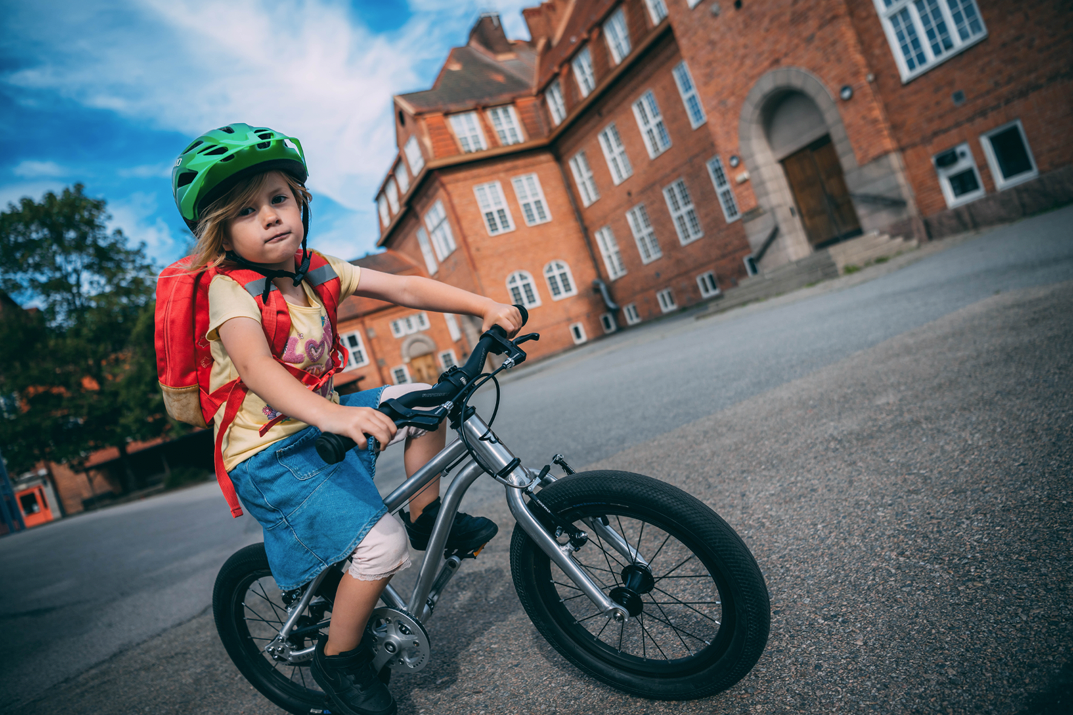
Learning to ride a bike is a big milestone for kids, and a proud moment for parents. But once children begin riding beyond the garden path or driveway, it’s important they understand how to share space safely with cars, pedestrians, and other cyclists. Teaching a few simple road rules early can make a huge difference to their confidence and safety.
Here are five essential road rules every young rider should know.
1. Don’t Ride in the Door Zone
When cars are parked along the street, there’s a hidden danger many kids don’t think about: car doors suddenly opening.
The “door zone” is the space next to a parked car where a door could swing open without warning. If a cyclist is riding too close, they could crash straight into it.
Teach your child to ride at least a door’s width away from parked cars where possible. If the street is narrow, encourage them to slow down and stay alert for people inside vehicles.
A good rule of thumb for kids: If you can touch the car, you’re too close.

2. Beware of Driveways
Driveways can be surprisingly risky places for young cyclists.
Drivers backing out of driveways often focus on traffic in the road and may not expect a child riding along the pavement. Similarly, a car turning into a driveway might cross directly in front of a cyclist.
Remind kids to slow down when passing driveways and look for signs a car might move - like reverse lights, an engine running, or wheels starting to turn.
Encourage them to think of every driveway as a place where a car could appear suddenly.

3. Make Eye Contact With Drivers When Crossing Roads
Children often assume drivers can see them, but that’s not always true.
Before crossing a road, kids should stop, look both ways, and try to make eye contact with any nearby driver. If the driver looks back or waves them through, it’s a good sign they’ve been seen. Though remember even if a driver waves them on, this does not mean it’s safe to cross - they need to stay alert for other traffic from all directions.
Explain that eye contact is like a quick “hello” that confirms awareness.
If they can’t see the driver’s eyes, they should assume the driver hasn’t seen them yet and wait.

4. Big Vehicles Have Big Blind Spots
Large vehicles like buses, trucks, and delivery vans can’t see everything around them.
These vehicles have blind spots - areas beside, behind, and sometimes directly in front where the driver can’t see a cyclist at all. Kids riding too close may be completely invisible to the driver.
Teach children to give big vehicles plenty of space. A helpful guideline is:
- Don’t ride right next to large vehicles
- Stay well back if they’re turning
- If you can’t see the driver’s mirrors, the driver probably can’t see you
Giving big vehicles extra room is always the safer choice.

5. Ride Predictably in Public Spaces
One of the best habits kids can learn is to ride predictably.
That means moving in a straight line, signalling intentions when possible, and avoiding sudden swerves or stops. Predictable riding makes it easier for drivers, pedestrians, and other cyclists to understand what a child is about to do.
Encourage kids to:
- Ride in a steady line
- Look behind them before turning
- Use clear hand signals when appropriate
- Slow down around pedestrians
When everyone can predict each other’s movements, the road becomes much safer.
High quality bike geometry can help as this increases control and confidence. Our Belter’s riding position is perfect for sharper, reactive handling, assisting balance in case of emergency manoeuvres.
The Goal: Confident, Aware Young Riders
Kids don’t need to memorise every road rule to ride safely, but understanding a few key ideas can make a big difference.
By teaching children to avoid the door zone, watch for driveways, communicate with drivers, respect the blind spots of large vehicles, and ride predictably, parents can help them build habits that will protect them for years to come.
With the right guidance and a little practice, cycling can remain what it should be for kids: fun, freeing, and safe.


Share:
Crafting the ultimate balance bike: The Early Rider way
Putting the 'Pro' in Progess